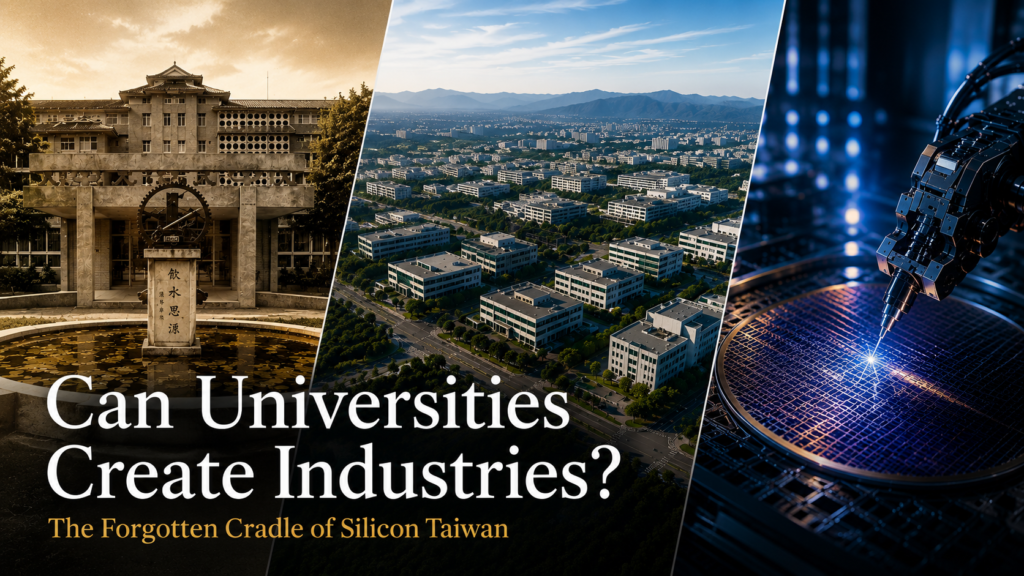
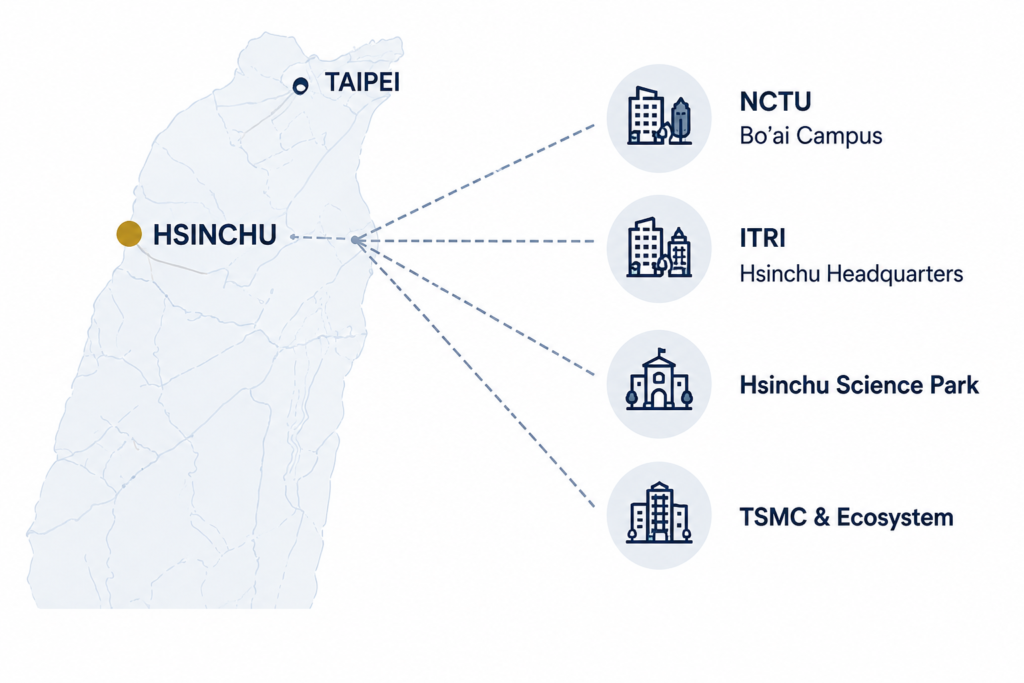
When people think about Taiwan’s semiconductor hegemony, they point to the titans that define it today: TSMC, the Industrial Technology Research Institute (ITRI), and the Hsinchu Science Park. Yet decades before these institutions changed the world, the blueprint for Taiwan’s tech miracle was already being drawn nearby.
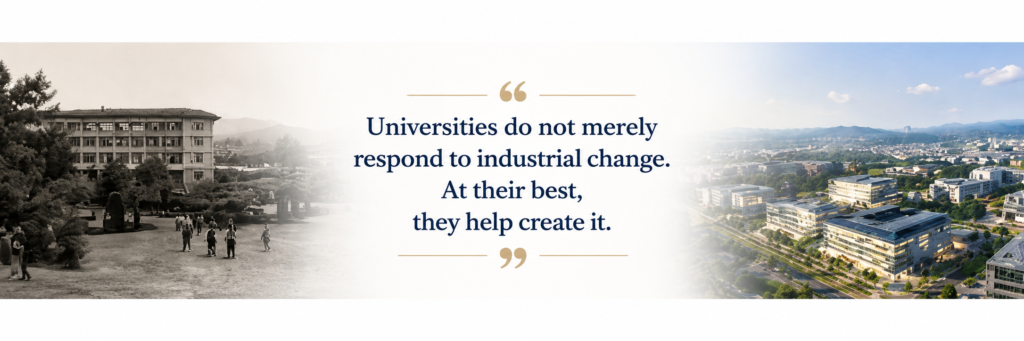
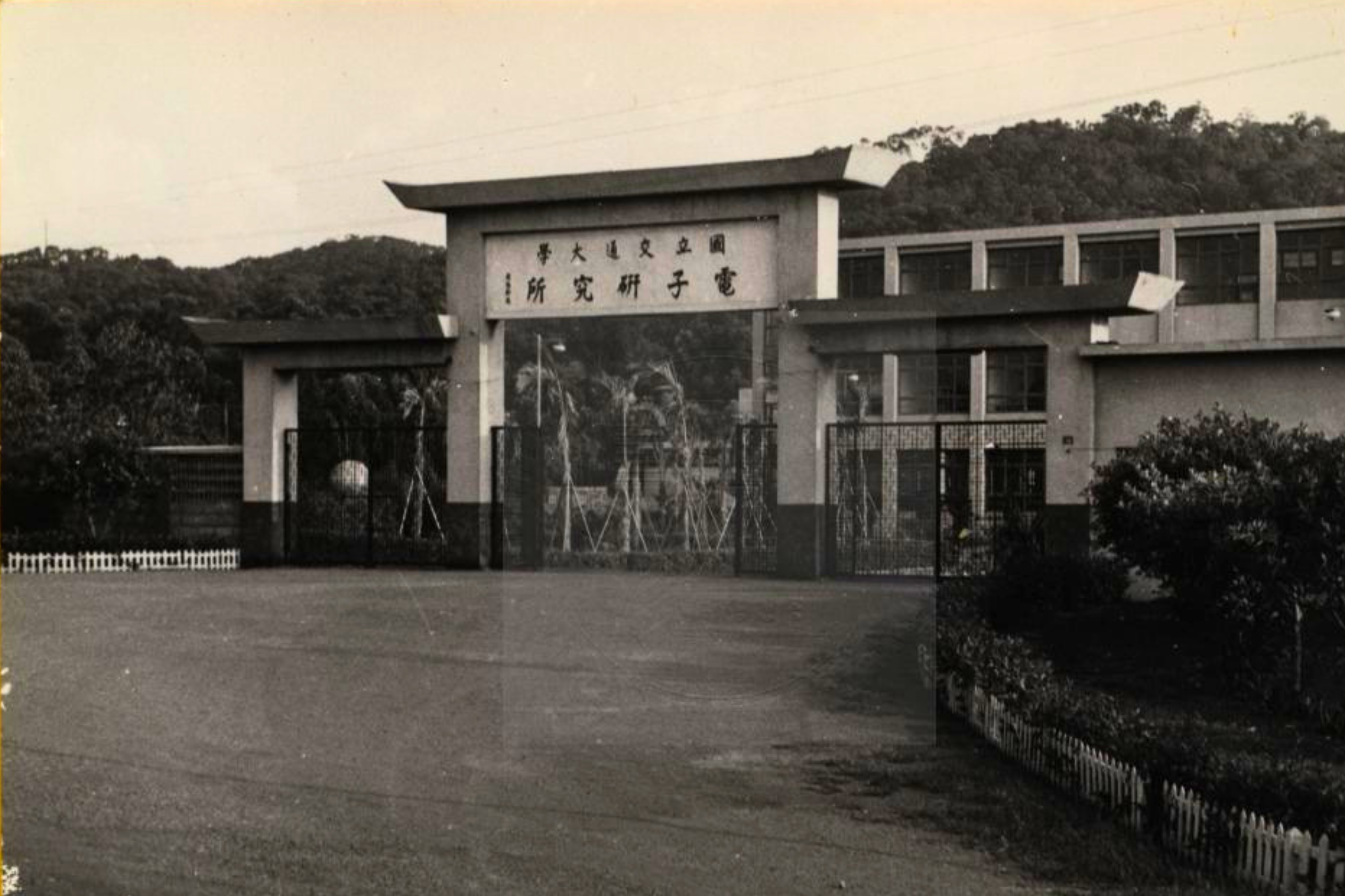
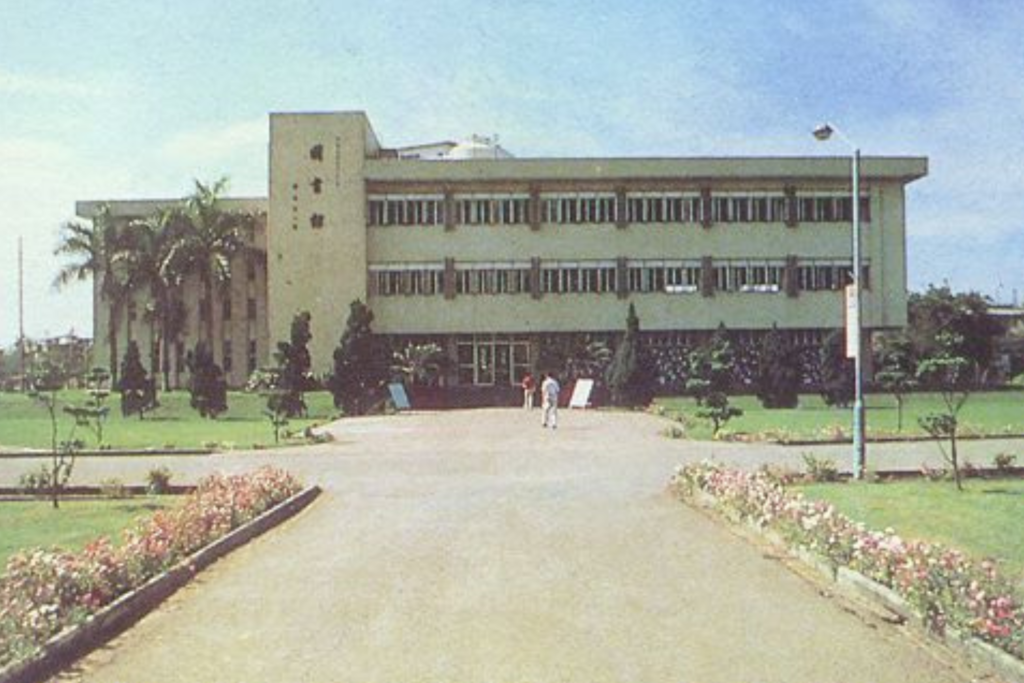
At the foot of Hsinchu’s Eighteen Peaks Mountain stood a modest university campus. In the late 1950s and 60s, it consisted of just a single academic building, a small pond, and a handful of dormitories. On a campus where students slept in classrooms and fell asleep to the distant roars of lions from the neighboring zoo, a technological revolution was quietly being forged.
Few could have imagined that the young minds working under those modest conditions would become the legendary entrepreneurs, scientists, and visionaries who helped transform Taiwan into one of the world’s most important technology hubs.
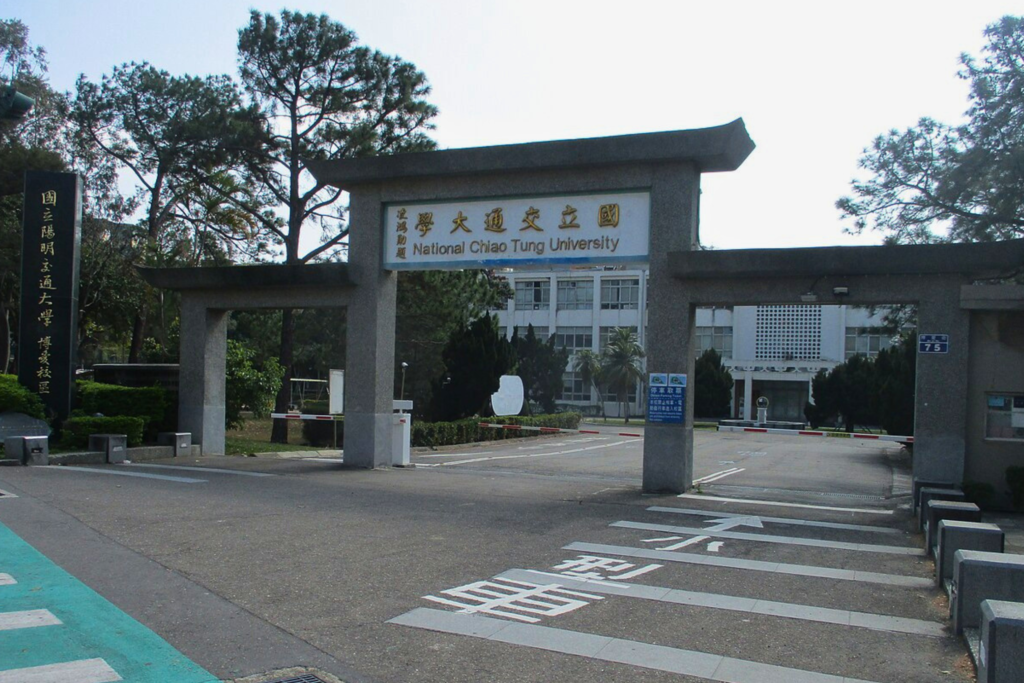
This was National Chiao Tung University’s Bo’ai Campus, now a vital anchor of National Yang Ming Chiao Tung University (NYCU). Its legacy is far more than a chapter in university history: it raises a larger question that remains intensely relevant today—can universities create entirely new industries?
01
A Decision Twenty Years Ahead of Its Time
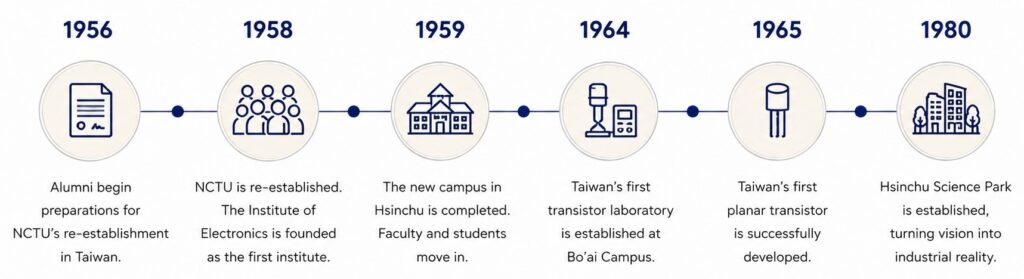
When NCTU was re-established in Hsinchu in 1958, Taiwan’s high-tech hegemony was unimaginable. The island’s economy was overwhelmingly agricultural, electronics manufacturing was virtually non-existent, and semiconductor physics was a term confined to distant, elite laboratories. Yet while other universities focused on conventional engineering disciplines such as civil, mechanical, or chemical engineering, NCTU boldly chose a different path.
Spurred by visionary alumni in the United States who had witnessed the first sparks of the postwar solid-state revolution, the university established Taiwan’s very first Graduate Institute of Electronics as its flagship program. Today, the decision appears visionary. At the time, it looked like a reckless gamble.
There was no semiconductor industry ready to hire graduates, no established supply chain, and no certainty that electronics would become a strategic pillar of Taiwan’s economy. Yet the university invested anyway.
Rather than responding to existing demand, NCTU was preparing for a future that had not yet arrived. This distinction was critical: would universities rarely change the world by following industries? They do so by anticipating them.
02
Why Hsinchu Mattered
The decision to anchor the re-established university in Hsinchu proved equally consequential. Today, Hsinchu is globallysynonymous with advanced technology and semiconductor manufacturing. In the late 1950s, however, it was merely a quiet, wind-swept town surrounded by sprawling farmland.
Students arriving at Bo’ai Campus saw open fields rather than research parks. There were no technology clusters, no venture capital firms, and no multinational semiconductor companies nearby. Yet, this relative isolation became the campus’s greatest strength.
Far from the distractions of the capital, Bo’ai Campus became an intellectual pressure cooker. Faculty and students lived, breathed, and worked side by side around the clock. A severe scarcity of resources forced a culture of radical resourcefulness—if a piece of lab equipment didn’t exist, they built it themselves from scratch.
Consequently, when the government established the Hsinchu Science Park in 1980, it was not building on barren land. It grew within an ecosystem that had already been forming for more than two decades. Pioneering engineers were already on-site, research expertise was mature, and professional networks were tightly knit. The physical infrastructure of “Silicon Taiwan” may have been unveiled in 1980, but its intellectual foundations had been laid in Hsinchu twenty years earlier.
03
The Culture of Building
Technology ecosystems are not created by infrastructure alone. They are built through habits, values, and ways of learning. In the early days of the Bo’ai Campus, no organization embodied this spirit more than the legendary Amateur Radio Club (ARC).
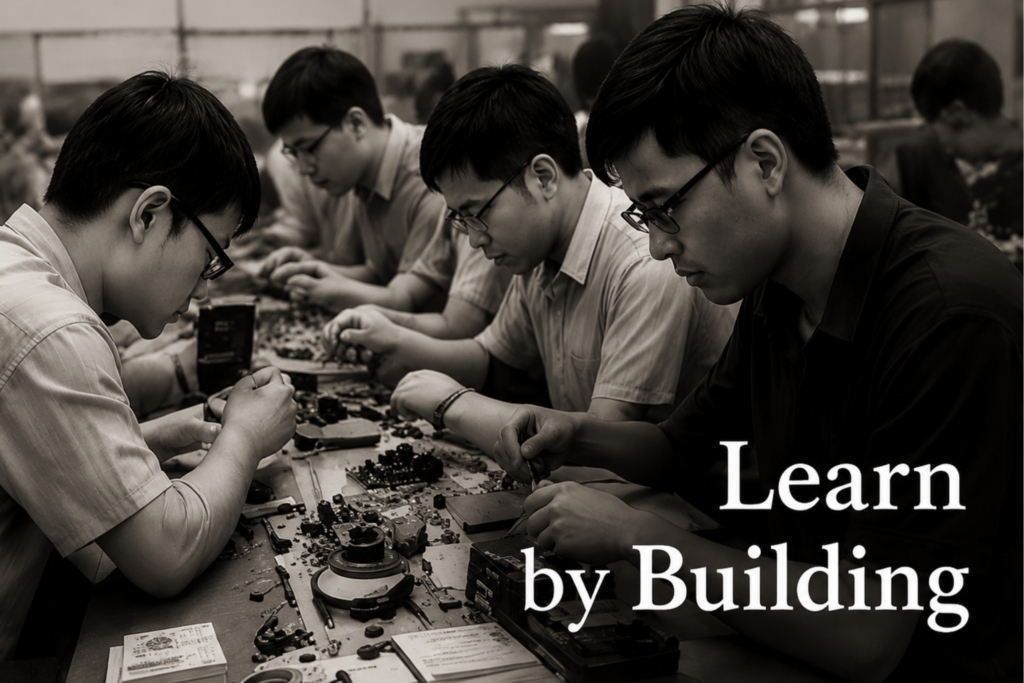
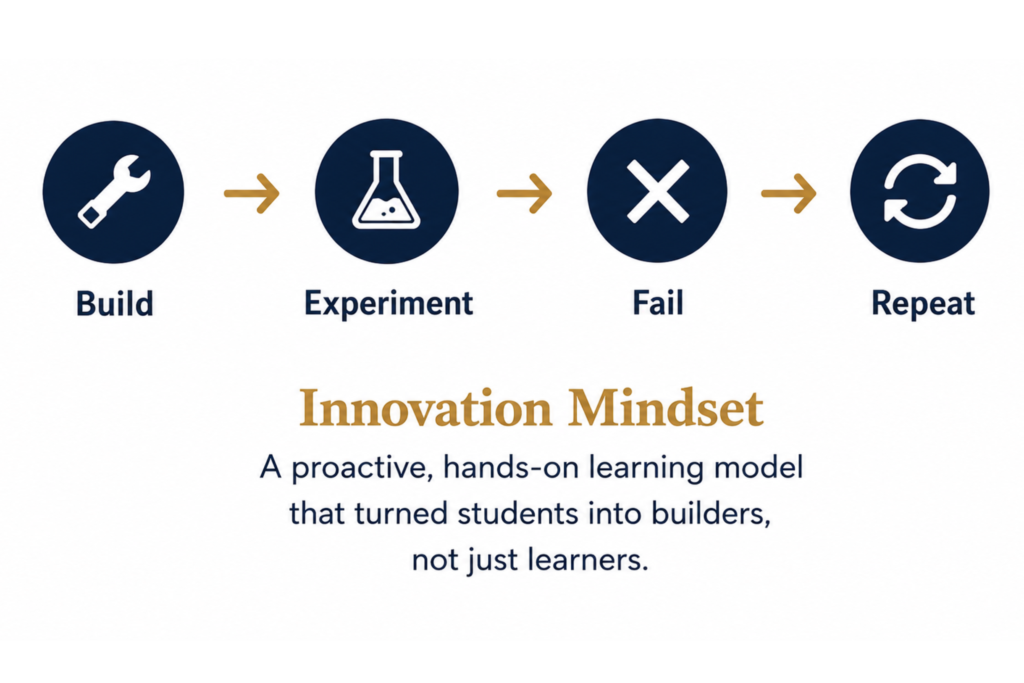
For students today, understanding how a device works may require little more than an online tutorial. For NTCU students in the 1960s, understanding technology meant building it from scratch. They assembled radios, soldered circuits, repaired equipment, experimented with communication systems, and spent countless hours troubleshooting failures. Dormitory rooms became informal laboratories filled with wires, electronic components, and homemade devices. The significance of ARC lay not in the radios themselves, but in the radical, proactive learning model they pioneered. These students refused to be passive consumers of knowledge—they were chronic builders.
Long before modern buzzwords like “maker culture,” “experiential learning,” or “startup incubation” entered higher academic vocabulary, NCTU students were already living them through pure trial and error. In doing so, they learned how to fail fast, pivot, and solve highly complex problems without waiting for instructions. That DNA of gritty resourcefulness would later become the defining characteristic of Taiwan’s global technology sector.
04
The Golden Triangle: How Universities Seed Industries
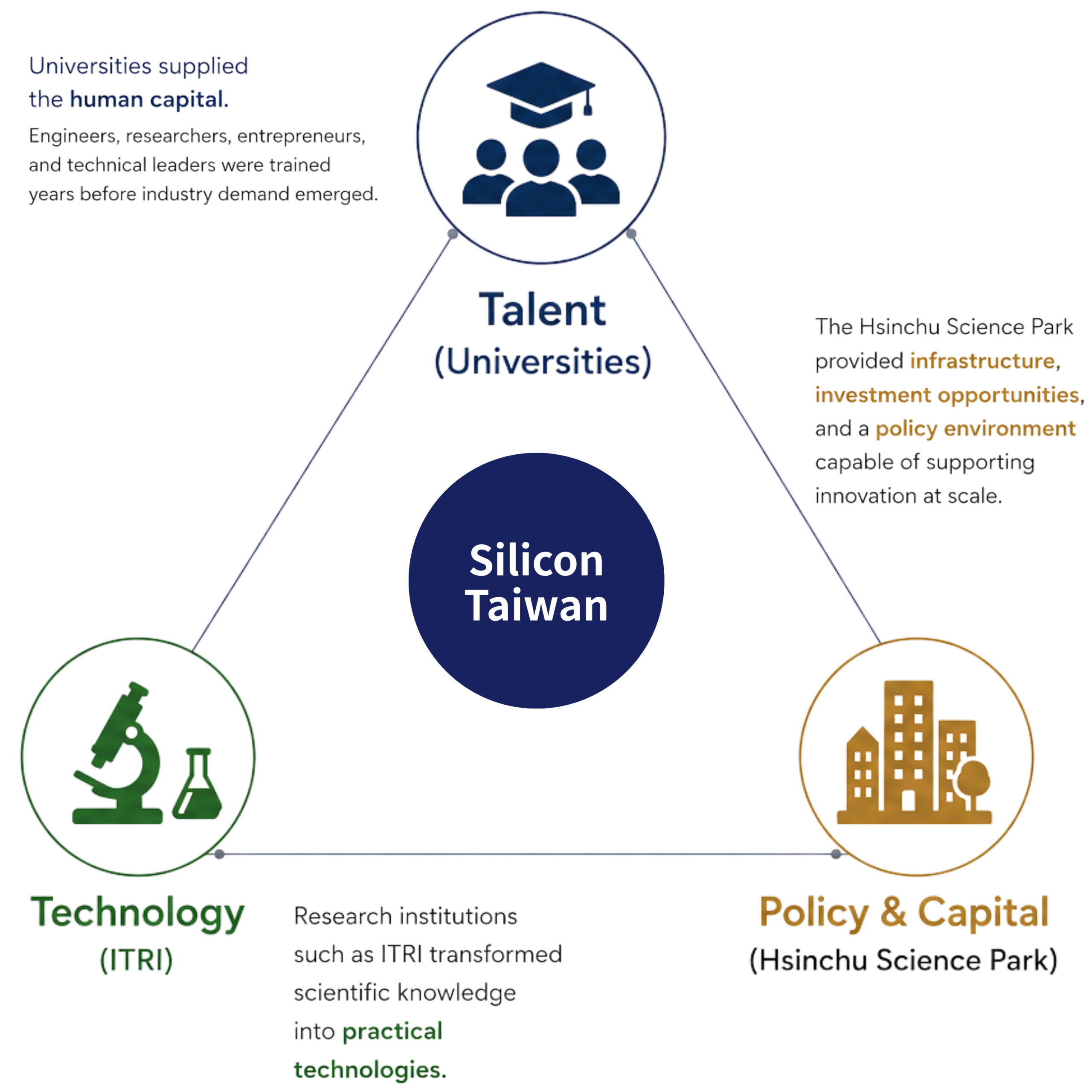
The history of Silicon Taiwan reveals an important lesson: industries rarely emerge from a single institution. They are the product of deeply interconnected ecosystems. Taiwan’s semiconductor dominance was not built by NCTU alone, nor by ITRI, nor by the Hsinchu Science Park. Instead, its success grew from the synergistic friction between all three.
Together, these three forces created a perpetual-motion machine: talent attracted capital, capital funded ideas, and ideas birthed global enterprises. This ecosystem perspective remains highly relevant today. As governments continue to search for a formula to replicate Silicon Valley’s or Taiwan’s semiconductor success, history suggests that technology hubs cannot simply be constructed. They must be cultivated over time.
05
The Power of Networks
The extreme physical limitations of the early Bo’ai Campus accidentally engineered its greatest structural advantage. At its heart stood Zhuming Hall—a single, iconic building that served simultaneously as administrative offices, classrooms, libraries, and laboratories. Because space was at a premium, students and faculty lived, studied, and worked in constant, unavoidable proximity. What emerged from this cramped environment was far more than an academic community. It was a lifelong network.
Faculty members knew students by name. Alumni maintained strong ties after graduation. Professional relationships formed naturally through daily interaction. As graduates entered the workforce, these connections extended across companies, research institutions, and government agencies. Talent, ideas, and opportunities flowed through this network because the people behind them already trusted one another implicitly.
Modern innovation policies heavily fixate on funding and physical infrastructure. Yet the history of “Silicon Taiwan” suggests that relational capital—the invisible network of deep, human trust—is the most powerful infrastructure of all.
06
The Semiconductor Blueprint for the AI Era
Today, humanity stands at another profound technological inflection point. Artificial intelligence is reshaping industries, economies, and societies at an unprecedented, exponential velocity. As higher education scrambles to adapt, the existential questions facing universities today are the exact same riddles that NCTU confronted in 1958:
● Which emerging fields deserve investment?
● What knowledge will actually endure twenty years from now?
● How do universities educate students for industries that have not yet been invented?
When NCTU wagered its future on electronics, there was no semiconductor industry waiting to reward it. The university built the talent before the demand existed; it forged the research capabilities before the market emerged. It threw its weight behind a future that only a small handful of visionaries could clearly see. That remains the most enduring legacy of the Bo’ai Campus.