
At a glance
- A Keelung seafood processor collects and dries fish scales for the team. The mixture sets quickly, leaving a short window for 3D printing.
- With recycled marine plastic, a robotic arm prints directly from design files. The team can change a shape or make a small batch without building a mold.
- The fish-scale project earned Asia Pacific bronze and Taiwan silver in 2024; the marine waste project earned Asia Pacific bronze and Taiwan gold in 2026.
From fish scales to discarded marine plastics, Assistant Professor Jian-You Li and his team at the Institute of Applied Arts (IAA), National Yang Ming Chiao Tung University (NYCU), have earned successive sustainability honors for circular design. Their fish-scale project received bronze recognition in Asia Pacific and silver in Taiwan in 2024; their marine waste project received bronze in Asia Pacific and gold in Taiwan in 2026. By combining materials development, 3D printing, and design applications, the team is exploring ways to bring discarded resources back into daily life while moving toward local manufacturing and further reuse after recycling.
How far is a scraped-off fish scale or a discarded fishing net from an object we use every day? Behind the two award-winning projects is a progression from experiments in 3D printing with fish-scale materials to digital manufacturing with pellets made from marine plastic waste. Starting with campus furniture and outdoor installations, the team hopes to give recycled materials a continuing role in daily life and bring circular design closer to the people who use it.
01Design Questions Rooted in the Keelung Coast
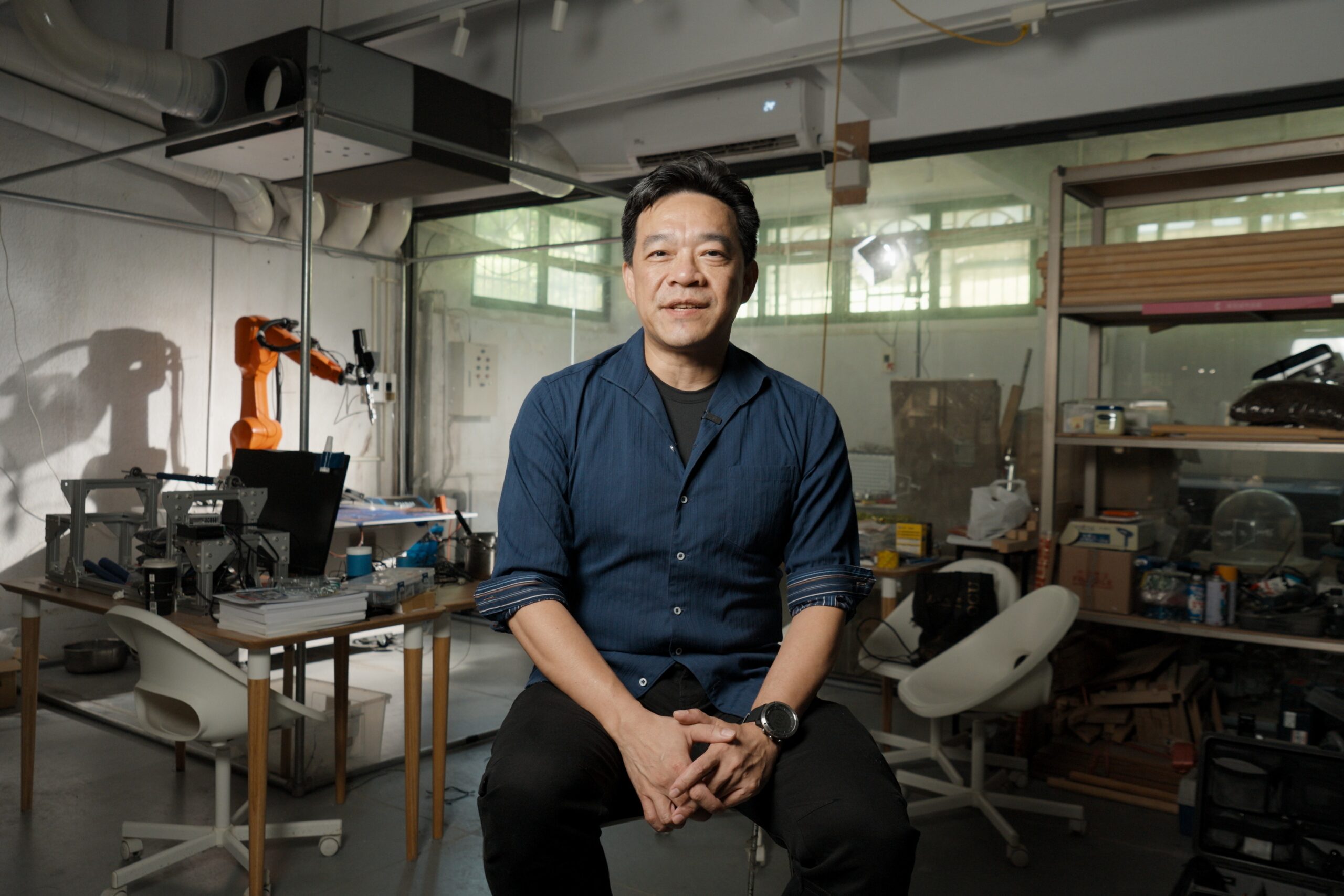
Li grew up in Keelung, where his family once worked in aquaculture, and later served in the coast guard during his military service. The sea has remained a constant presence in his life. Waste accumulating on beaches and around harbors was a familiar sight and became a personal reason to pursue circular materials. He says he is willing to contribute if his design expertise can help improve the environment: when no one pays attention, discarded waste simply keeps piling up.
While pursuing his doctorate in Japan, he found a new way to act on that concern. Inspired by his adviser’s work in circular materials and digital manufacturing, Li began exploring the upstream stages of sourcing and preparing materials. Design questions expanded beyond a product’s form and use to include where its materials come from, how they are processed, and whether they can be used again. This is also the perspective he hoped to share with students after returning to Taiwan.
02Hard-to-Collect Fish Scales Inspire a New Partnership
The fish-scale research began through collaboration with the craft sector. When Li learned that the gelatinous components naturally present in fish scales could help a material solidify, he saw their potential for 3D printing. Once the work began, however, securing a supply proved challenging. Fish scales are light, thin, and scattered, and busy fish markets do not always have the time to separate them from entrails and other waste.
A seafood processing plant in Keelung offered a breakthrough. On hearing that fish scales could become a usable material, the company volunteered to collect and dry them. An ingredient that had been difficult to obtain gained a new supply source because someone understood its possible use. The experience showed the team that circular design also depends on finding partners willing to change how materials are handled.
Much work remains before fish scales become an easy-to-use material. A mixture of fish glue and fish powder begins to set soon after mixing, limiting the available printing time. Raw-material storage and surface finishing also need improvement. Li sees it as a craft material with room for continued development. Through workshops and exchanges, he hopes to involve more makers in exploring finishing techniques and potential applications.
03Recycling Marine Waste Is Only the Beginning
After discussions with faculty at National Taiwan Ocean University, the team turned its attention to marine plastic waste. Unlike fish scales, whose initial processing required the researchers to develop their own methods, marine plastics already have industrial systems for collection, cleaning, shredding, and pelletizing. These processes can supply pellets for the team’s printing work. Having recycled feedstock, however, does not mean the circular process is complete.
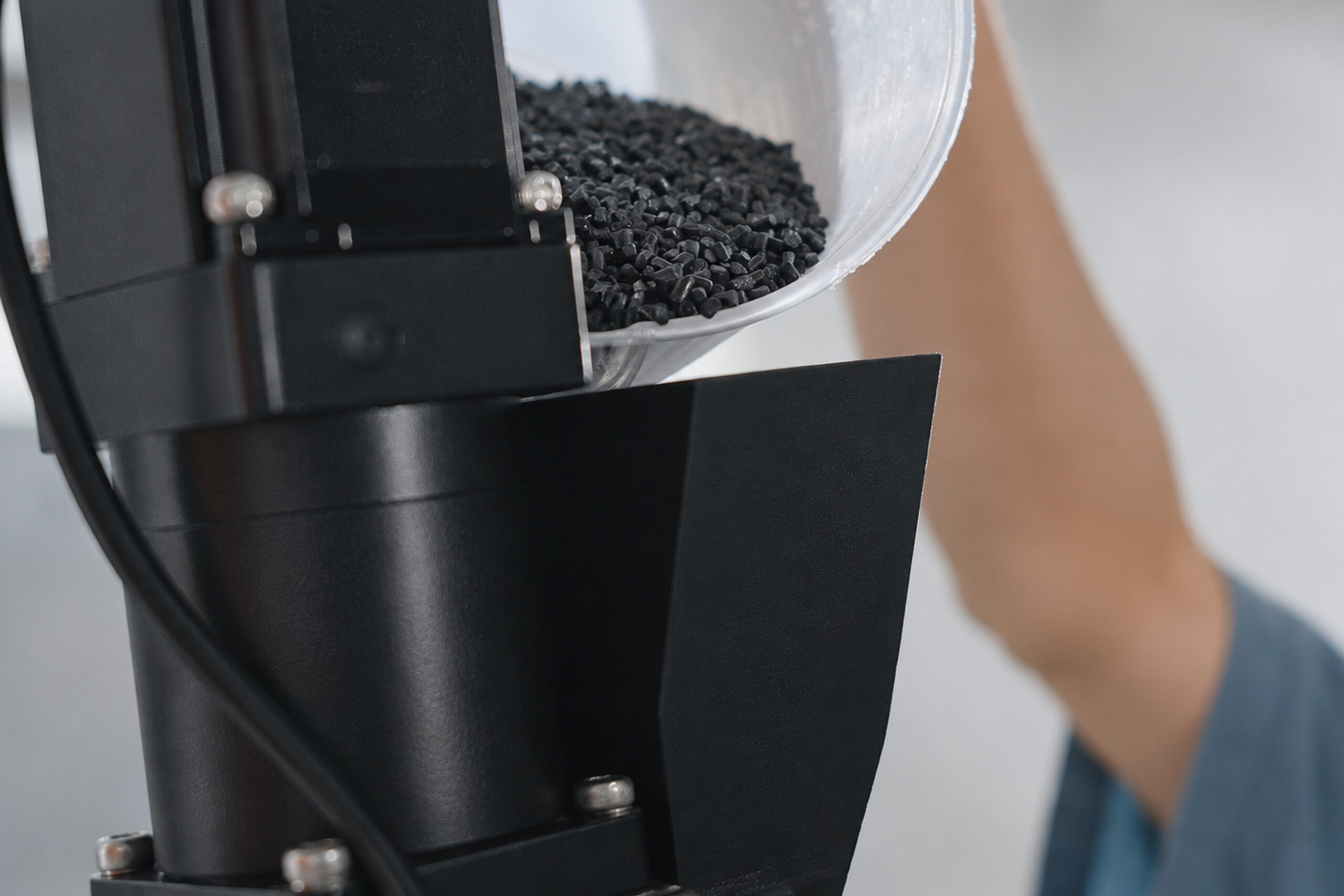
Li reminds his students that continued use downstream is needed to sustain recycling upstream. Recycled marine plastics do not necessarily cost less than conventional plastics, and aging and impurities can affect both appearance and printing performance. The team hopes to connect these stages by using design to make objects that people want and need.
Progress has been slower than initially expected. Different batches of marine plastics may require adjustments to printing conditions because of variations in origin and degradation. Drying pellets in a humid environment and obtaining equipment large enough for bigger objects are further challenges. Before future furniture applications, strength, weather resistance, and safety in contact with users must be assessed for the intended use, along with whether material formulations need adjustment.
04A Laboratory Becomes a Local Manufacturing Hub
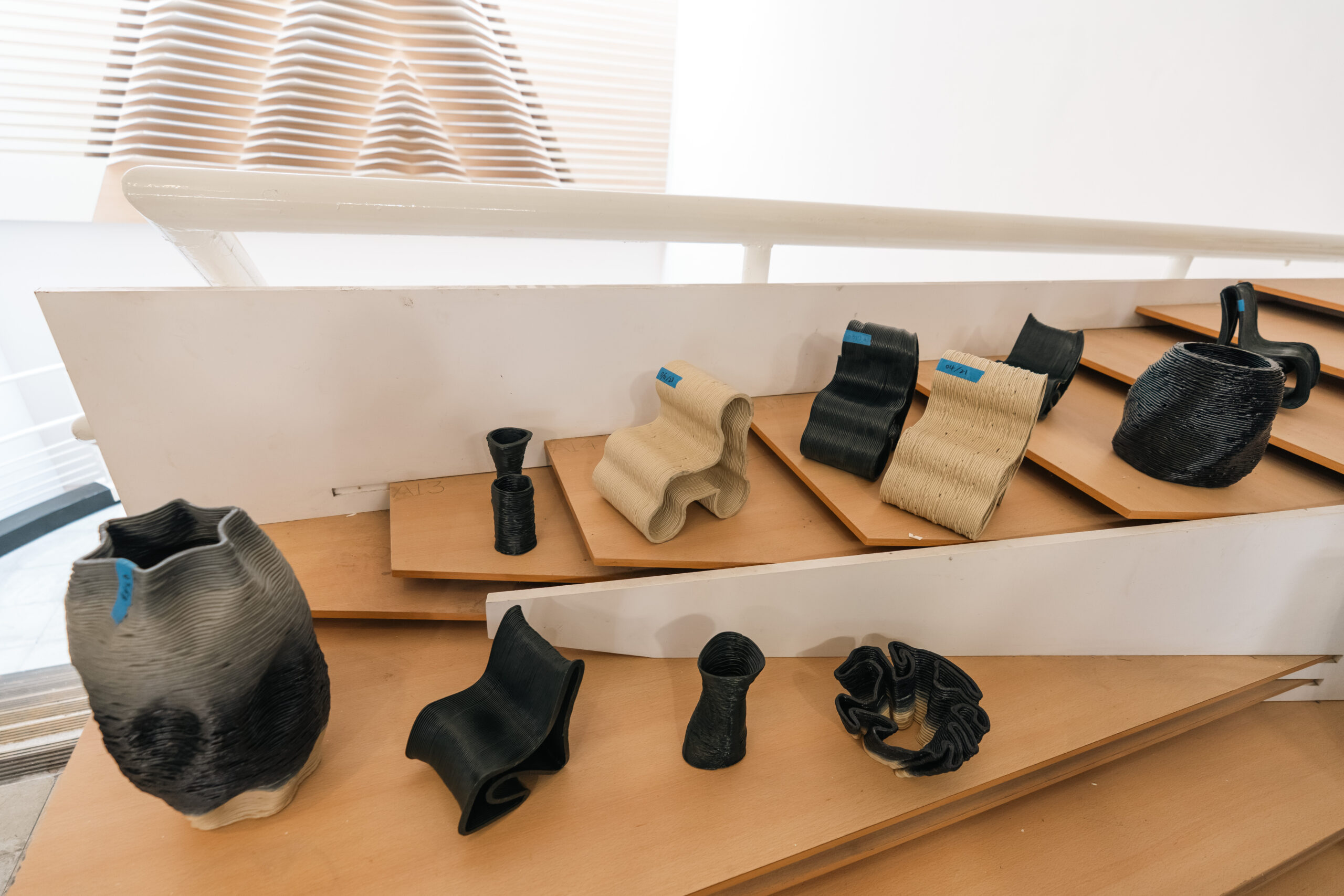
The team combines a robotic arm with pellet-extrusion 3D printing to explore customized production in small quantities. Rather than developing molds for mass production, digital manufacturing can produce objects directly from design files. Avoiding mold development can save time and expense while allowing greater flexibility in quantity and form.
Li uses furniture to explain the idea: if five chairs are needed today, make five. If a counter or table is needed tomorrow, adjust the design to suit. He also envisions classroom desks and chairs that could accommodate individual students instead of giving an entire class the same dimensions. These are among the applications the team hopes to develop further.
If more schools, organizations, and community sites had access to equipment and shared design files, materials knowledge, and printing parameters, they could form a decentralized digital manufacturing network in which each location makes objects according to its needs. During the pandemic, the laboratory 3D-printed plastic frames for face shields, paired them with transparent sheets, and supplied them to a military hospital. The experience showed the team how local manufacturing could respond to urgent needs.
05Giving Discarded Materials Forms That Fit Local Needs
Li hopes to begin in the familiar setting of the university campus, gradually developing applications for furniture, display stands, and outdoor installations. Furniture no longer needed after a conference or display stands left idle after an exhibition could potentially be reprocessed into objects for the next event, provided that the materials are suitable for recycling, clearly sorted, and subject to quality control.
“The material is still there. It simply takes on a different form to meet different needs.”
— Assistant Professor Jian-You Li, Institute of Applied Arts, National Yang Ming Chiao Tung University
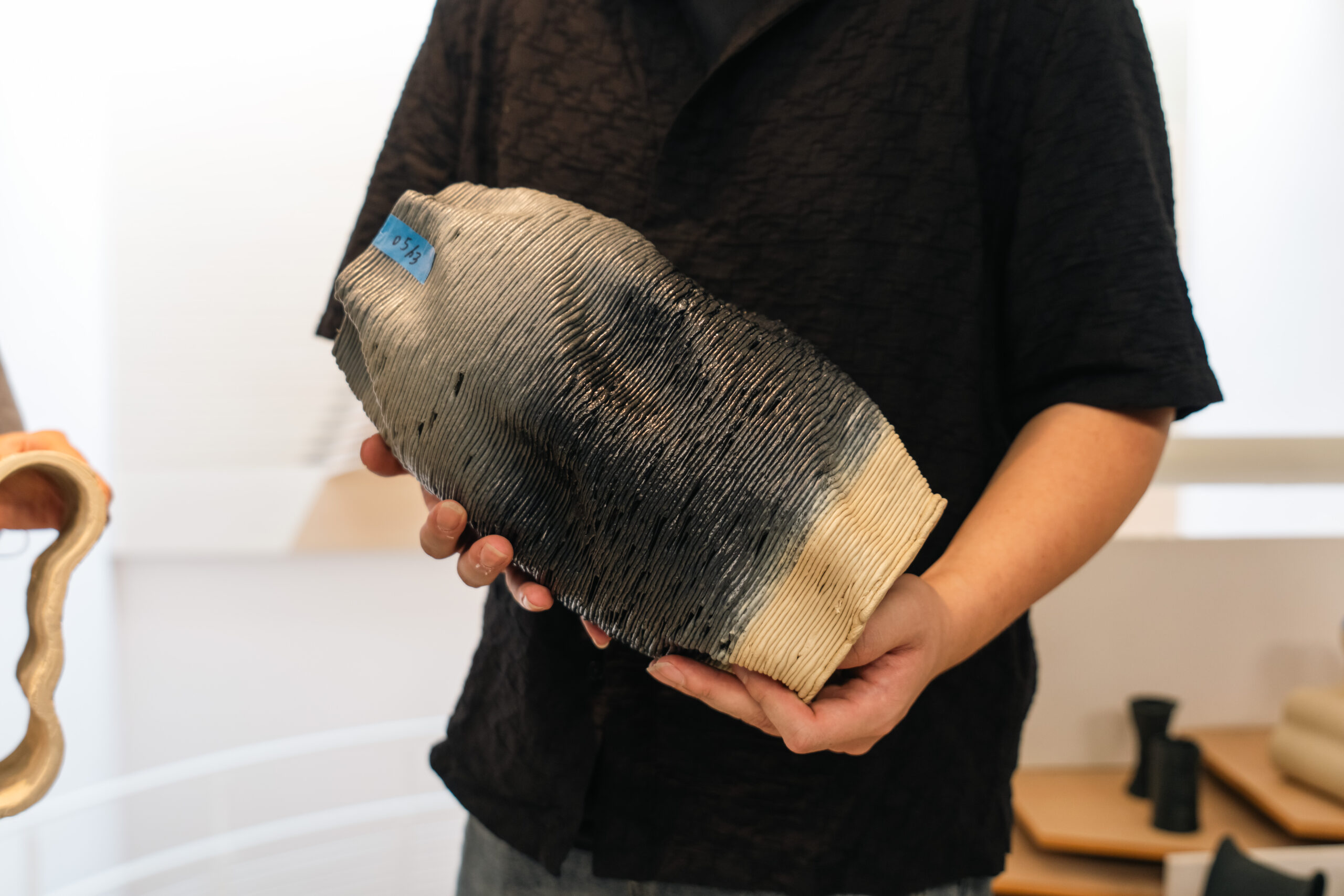
The idea extends to his hometown. The team has held a workshop with Keelung Senior High School, and Li hopes to work with local organizations to explore public-use objects such as seating in fishing-port neighborhoods. When people can see and use designs made from marine waste in their daily surroundings, questions about materials and the environment can become tangible.
06Bringing Questions into the Lab and Sharing Solutions
The laboratory brings together medical design, craft, and circular materials. Students’ investigations extend beyond marine resources to sources such as okara, the pulp left over from soybean processing, and discarded ceramics. As design research moves into materials and manufacturing, the knowledge designers need also expands to include material properties, strength testing, and safety requirements for different uses.
A recent collaboration with environmental engineering researchers has raised new questions. The team is experimenting with marine waste materials to make black soldier fly rearing facilities. It has also noticed the continuing supply of pupal shells generated during rearing and is considering whether these could become a new printing material. This application remains exploratory; a mature production process has not yet been established.
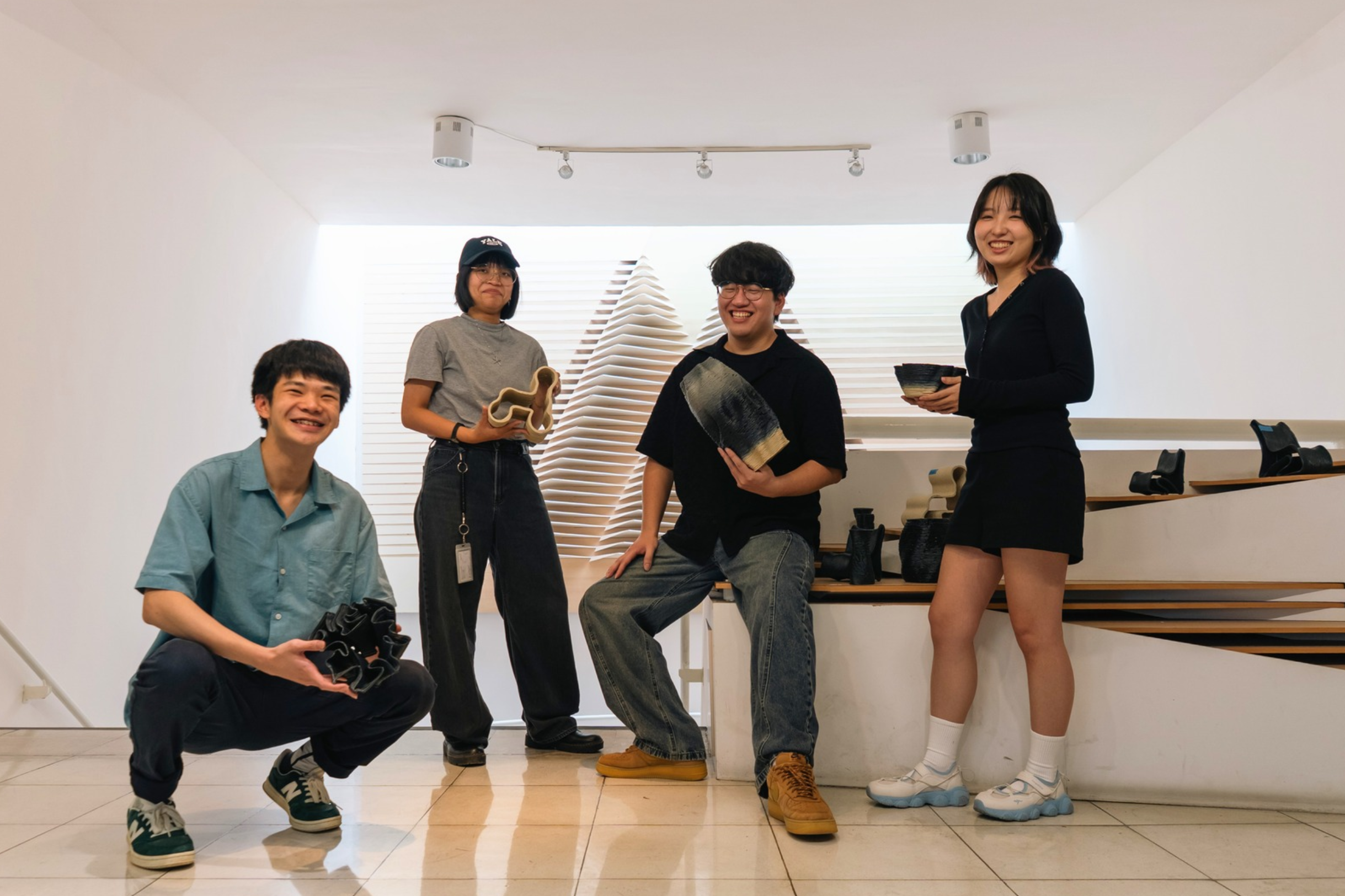
For Li, the next step also means enabling others to carry the work forward. He hopes to clarify material characteristics and printing parameters, share techniques, and involve organizations with suitable spaces and practical needs. From a fish scale to a chair, the team continues to ask how something once discarded can become a material that the next person wants to use—and can keep using.
Research Status
The team has printed samples and prototypes. Before using the material for furniture, it needs to test strength, weather resistance and safety for each intended use. Reprocessing old furniture will also depend on sorting and quality control.