At a glance
- Co-Insight AI Eye II helps fact-checkers trace AI assessments to specific frames, timestamps, suspected anomalies, and confidence levels.
- The NYCU team is exploring how human observations, including eye-tracking and EEG signals, could complement model analysis.
- The platform is undergoing internal testing at investigative agencies. Human–AI integration remains under research, and outputs require professional review alongside other evidence.
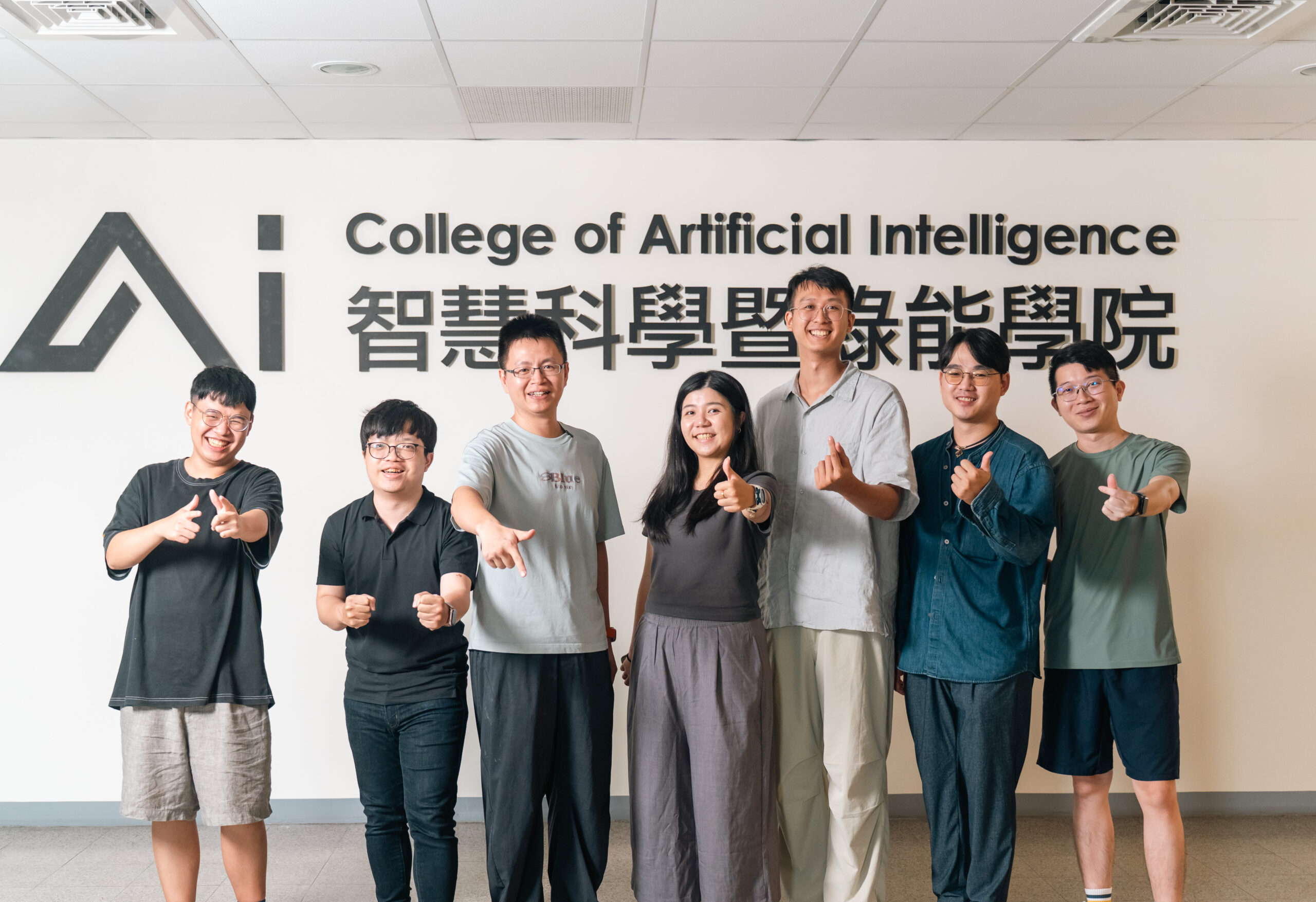
As AI-generated images and videos become increasingly realistic, a single authenticity score is no longer enough for fact-checkers. A team led by Associate Professor Chih-Chung Hsu of the College of Artificial Intelligence at National Yang Ming Chiao Tung University (NYCU) has won a 2026 Future Tech Award for Co-Insight AI Eye II, a platform for tracing evidence in AI-generated media and supporting joint human–AI review. This marks the team’s third consecutive year receiving the award. The researchers are extending their work beyond detection to help users examine the evidence behind AI assessments. They are also exploring ways to feed human observations back into models, making media forensics a collaborative process that can be understood, reviewed, and refined.
01A Research Journey Sparked by a Fabricated Advertisement
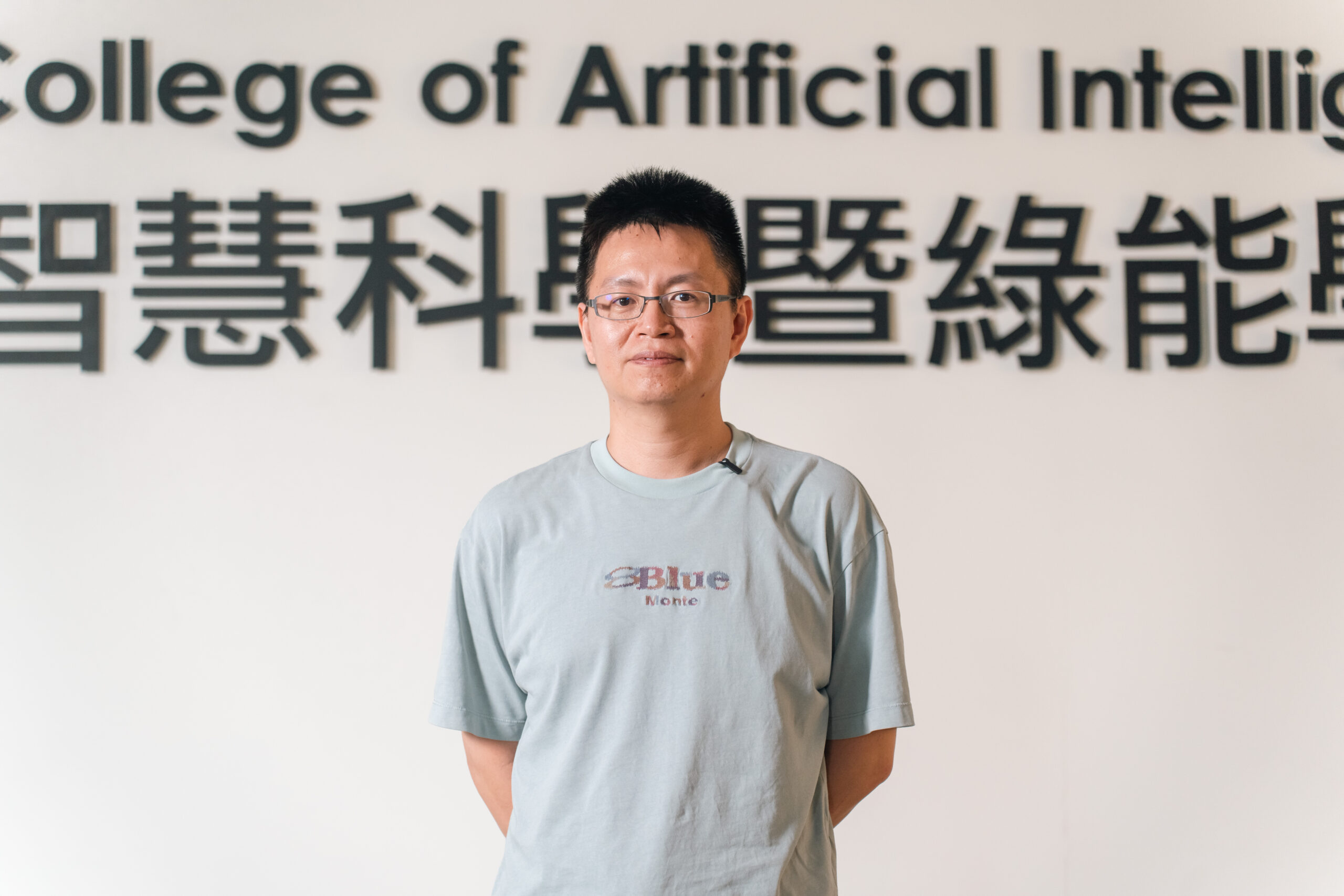
Hsu’s interest in image forensics began with an advertisement showing a celebrity carrying a branded backpack. The celebrity later clarified that they had never used the product. The incident prompted Hsu to ask: If the person in the photograph had not noticed the misuse of their image, who would have recognized the deception? As manipulation tools become more sophisticated and accessible, can people still trust what they see on social media?
That question has driven the team’s research into manipulated images and AI-generated media for approximately eight years. Through discussions with fact-checkers and investigative agencies, the researchers found that practical verification requires much more than a model’s classification or score. Before incorporating an analysis into a fact-checking report, journalists need to explain which part of an image or video is problematic, what evidence supports that assessment, and why the clues are credible.
02Tracing Each Assessment Back to the Evidence
Co-Insight AI Eye II therefore centers on an evidence trail. Alongside detection results, it organizes information about each detector’s suitability, the locations of suspected anomalies, and confidence levels. Users can return to a particular timestamp, face, or frame to inspect the areas highlighted by the model and determine whether those clues support its assessment.
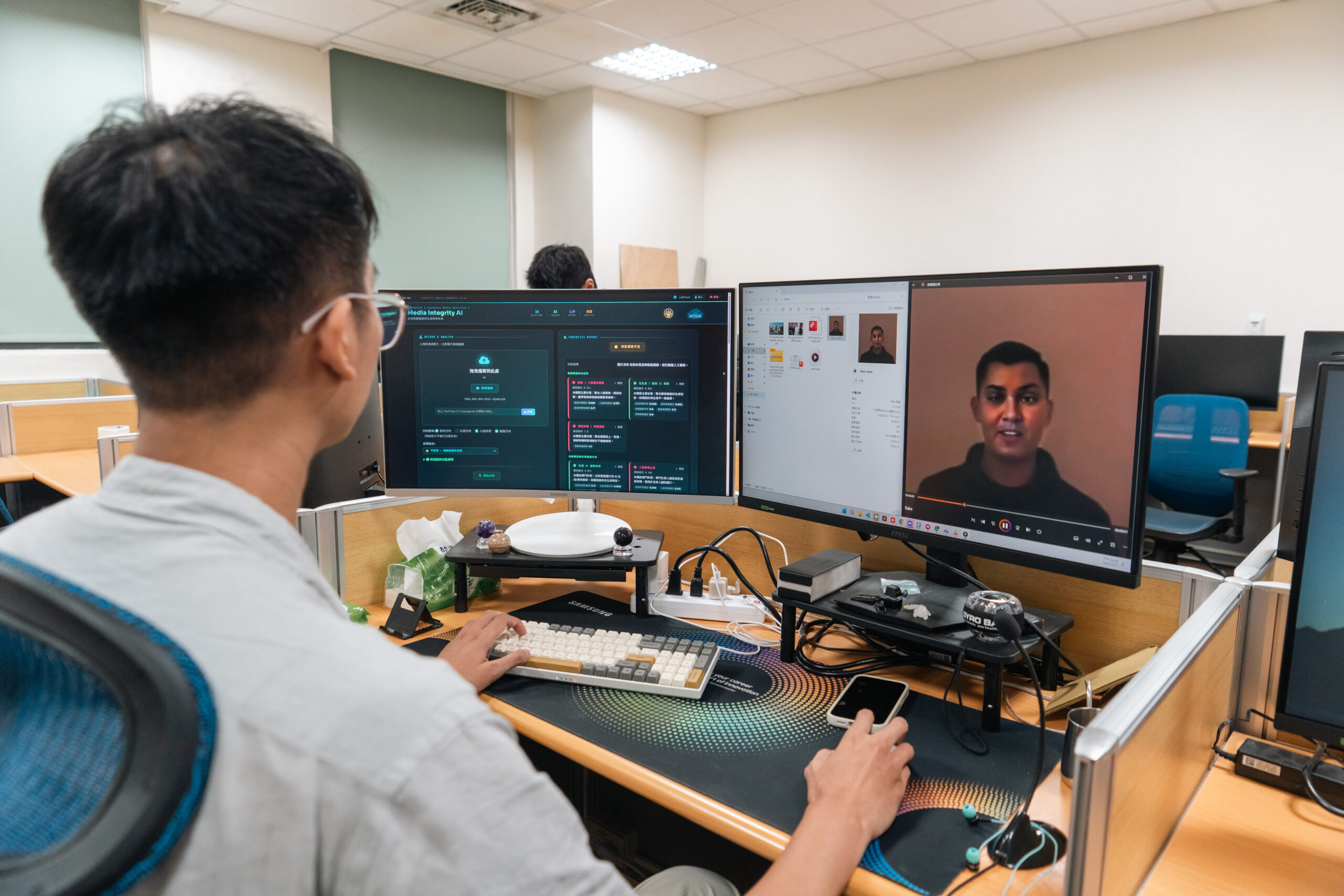
Scores also need to be interpreted in context. The type of media a model was designed to analyze affects how useful its results may be. If users consider a detector unsuitable, they can exclude its results and rerun the analysis, gradually building a more reliable basis for judgment. The platform supports an analytical process that people can retrace and revise, rather than leaving the final decision to a number.
“AI serves more as a source of supporting evidence.”
— Associate Professor Chih-Chung Hsu, NYCU
03Turning Human Observations into Clues for AI
Making AI understandable to people raises another question: Can human observations, in turn, help AI? Hsu notes that models may miss important clues when confronted with manipulation techniques they have not encountered during training. People may notice anomalies by drawing on experience and common sense. When people and models focus on different areas, and each has sound reasons for doing so, combining their observations could help address gaps in both approaches.
Working with psychology researchers, the team is using eye tracking and electroencephalography (EEG) to explore where people direct their attention and how they respond when viewing manipulated images. Hsu says preliminary observations suggest that people and AI may indeed attend to different clues. Trained participants may also show more pronounced EEG responses within roughly 500 milliseconds of viewing an image. These findings offer directions for further research, but more work is needed to determine how such signals can be converted into reliable information that models can use.
The team hopes that professional fact-checkers’ accumulated experience can eventually inform AI in meaningful ways, with models presenting their analyses clearly for renewed human review. This would create a cycle of ongoing refinement. Before such collaboration can become part of everyday work, however, the cost, speed, and reliability of eye-tracking and EEG equipment remain challenges to be addressed.
04Using Tiered Detection to Prioritize Review
Generative tools have made content easier to produce while increasing the workload for fact-checkers. Fully analyzing every suspicious image or video and then reviewing each one manually could overwhelm both computing resources and staff. The team is therefore also exploring lightweight models and ways to anticipate trending topics, aiming to improve processing speed while maintaining detection performance and helping prioritize verification work.
In the workflow Hsu describes, fast models first screen for suspicious content related to topics likely to attract attention. More complex models then conduct deeper analysis, and cases that remain inconclusive are referred for further human investigation. According to Hsu, the platform is undergoing internal testing at investigative agencies, and the team plans to work with external organizations to broaden its use. Securing the computing resources needed to support more users remains a major challenge in taking the technology beyond the laboratory.
05Looking Beyond Visual Anomalies to Verify Sources
As generated images become more convincing, verification must also consider where an image was taken, where it came from, and its surrounding context. Hsu points out that a photograph may look natural at first glance, yet a comparison with the actual location can reveal that a landmark does not exist. In such cases, the decisive clues come from checking the image against the real world.
The research must also distinguish AI-generated material from false content: using AI to polish an article does not mean its claims are untrue. The team hopes to build collections of Taiwan-specific data and Traditional Chinese language corpora while considering data representativeness and model fairness. By combining human experience, model analysis, and source verification, the researchers aim to establish a more comprehensive basis for assessing media.
Research Status
The platform is currently undergoing internal testing at investigative agencies. Eye tracking, EEG, and the integration of human and AI observations remain areas of research. The preliminary observations do not establish a broadly applicable method for interpreting physiological signals. Platform outputs should be reviewed by professionals alongside other evidence.