
Proudly powered by WordPress
Advanced periodontal disease affects more than 1 billion people worldwide, according to the World Health Organization. A joint research team from National Yang Ming Chiao Tung University (NYCU) and Taipei Veterans General Hospital (TVGH) has developed a decellularized natural matrix derived from Wharton’s jelly in human umbilical cords. In a rat model of periodontal defects, the matrix appeared to stimulate bone regeneration and periodontal ligament renewal, suggesting a potential strategy for restoring both types of tooth-supporting tissue at the same time.
01
Stimulate Bone Regeneration and Periodontal Ligament Renewal
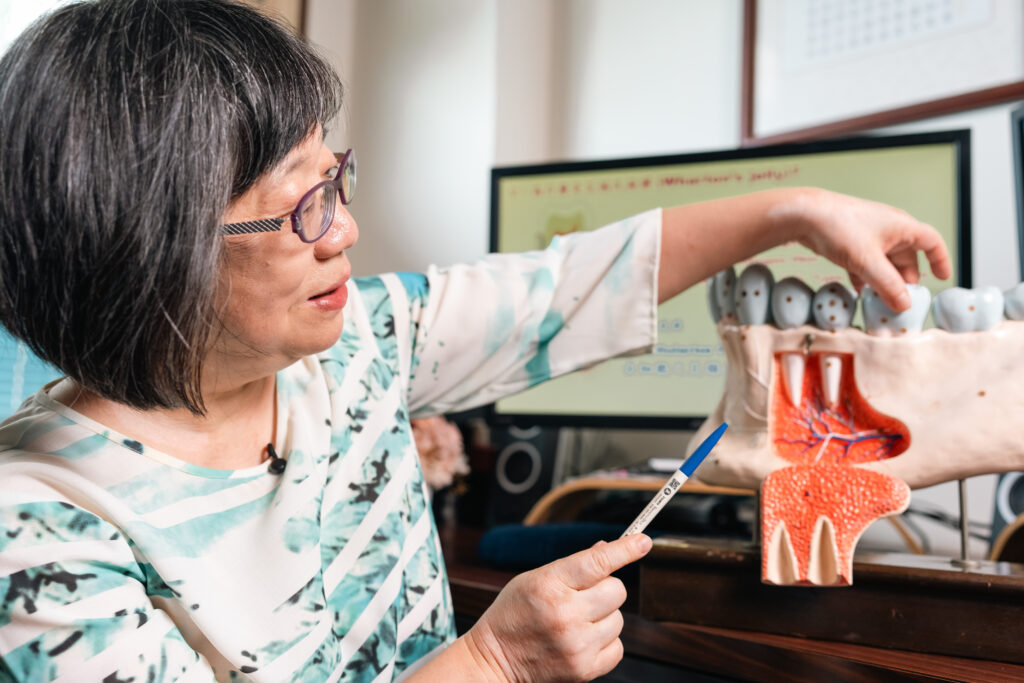
Periodontal disease damages the alveolar bone and periodontal ligament that support the teeth. As the disease progresses, periodontal pockets deepen, alveolar bone is lost, and teeth may gradually loosen or even fall out. Current treatment for moderate to severe periodontal disease may involve flap surgery together with bone graft material or regenerative membranes to promote tissue repair. Yet reliably rebuilding both alveolar bone and periodontal ligament within the same defect remains a major challenge in periodontal regenerative medicine.
Seeking a new materials-based strategy, Professor Yu-Show Fu of NYCU’s Institute of Anatomy and Cell Biology collaborated with Cheng-Fong Chen of the Department of Orthopaedics, Wen-Liang Lo of the Department of Stomatology, and Chang-Ching Yeh of the Department of Obstetrics and Gynecology at TVGH. The team freeze-dried and decellularized Wharton’s jelly from human umbilical cords, preserving its extracellular matrix to create a natural scaffold containing no living cells.
02
Wharton’s Jelly Provides a Natural Environment for Cell Growth
Wharton’s jelly surrounds the blood vessels of the umbilical cord and is rich in hyaluronic acid, collagen, and other extracellular matrix components. The team’s analysis found that the decellularized Wharton’s jelly matrix (WJD) retained a three-dimensional porous structure that can support cell migration, attachment, and growth. Because the material contains no living cells and does not require stem cells to be added during implantation, it may ultimately offer greater flexibility than cell-based therapies in storage, transportation, and manufacturing.
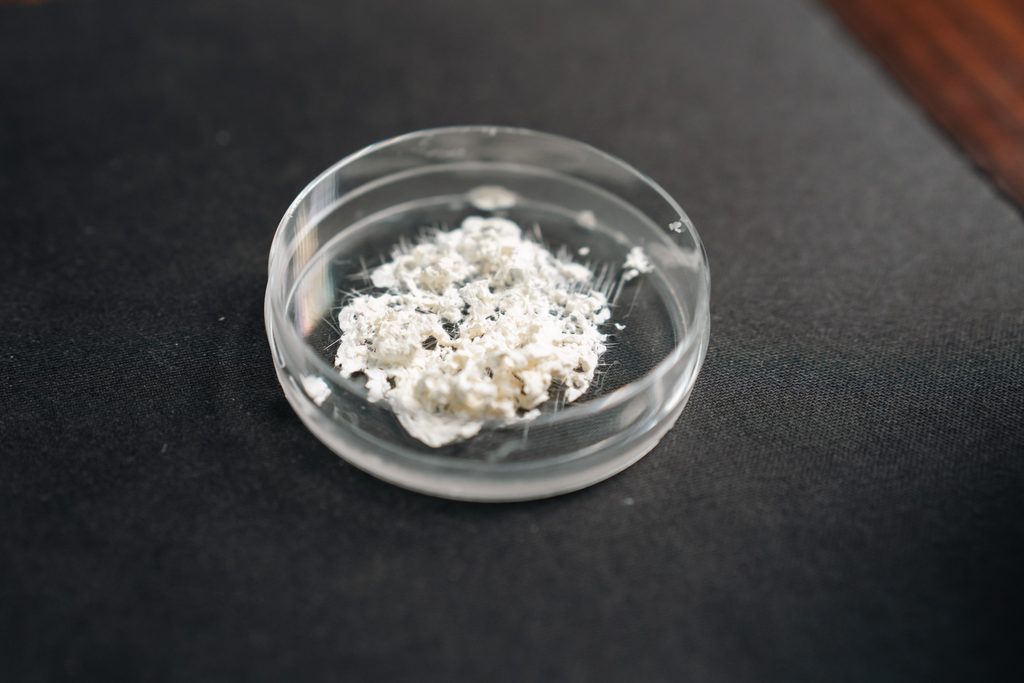
Umbilical cords used to be treated as waste after childbirth, but to me, the umbilical cord is truly a gift from nature.”
– Professor Yu-Show Fu, Institute of Anatomy and Cell Biology at NYCU
03
A Rat Model Offers Early Evidence of Regenerative Potential
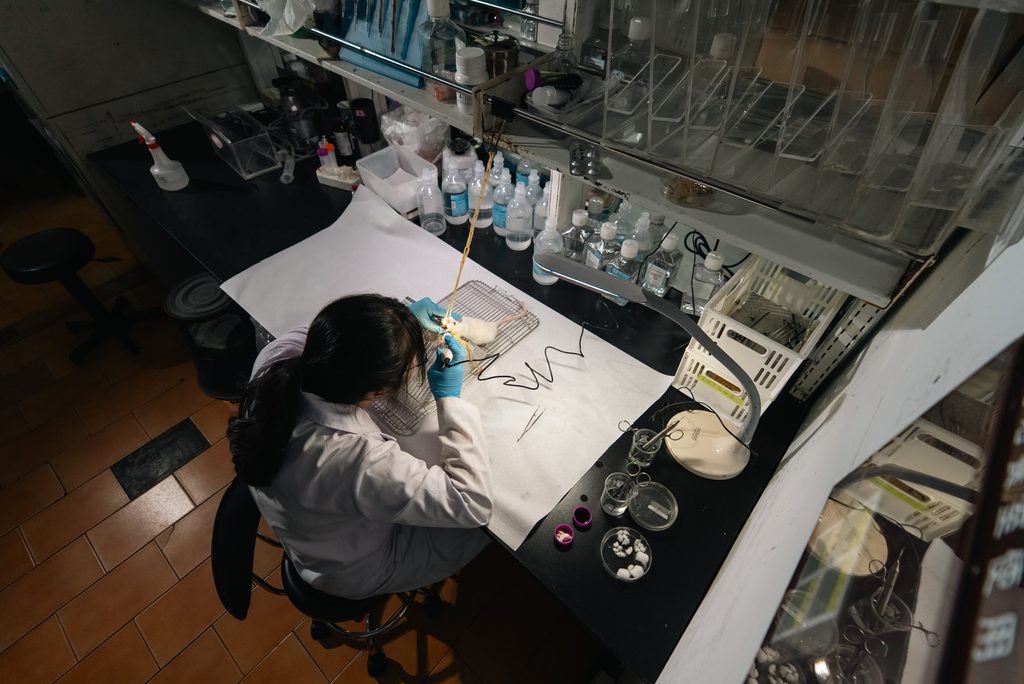
The researchers created defects affecting the alveolar bone and periodontal ligament around the mandibular molars of rats, then implanted WJD. According to the team’s animal-study results, new bone formation and periodontal ligament repair were observed in the treated areas without the addition of stem cells or bone graft material. Both types of tissue repair were more pronounced than in the control group. The significance of the result lies not only in promoting bone growth, but also in the simultaneous repair observed in the periodontal ligament.
Located between the tooth root and alveolar bone, the ligament anchors the tooth and cushions it during biting. If further preclinical models and human trials confirm the material’s safety and effectiveness, it could offer a new option for periodontal tissue regeneration and for managing bone defects before dental implant placement.
04
From Umbilical Cord Research to Cell-Free Regenerative Materials

Fu has studied umbilical cords and regenerative medicine for more than two decades. Her early work focused on the potential of umbilical cord mesenchymal stem cells in areas including neurodegenerative disease, pulmonary fibrosis, and tissue repair. In recent years, her team has also explored ways to transform umbilical cord tissue into biomaterials containing no living cells. Since 2018, the researchers have studied bone repair and later applied WJD in a model of periodontal defects.
The team’s related findings were published in Biomaterials Science and selected as a journal cover story. The researchers have obtained a Taiwan patent and are pursuing international patent protection, with the goal of establishing methods for material preparation, quality control, and scaled-up production.
In the next phase, the team will continue to evaluate repair across periodontal defects of varying severity, the possibility of combining WJD with bone graft material, and the material’s long-term safety, immune response, and manufacturing consistency. Fu emphasized that the ultimate aim of the research is to address clinical needs. Moving from animal studies to use in people, however, will require rigorous preclinical testing, regulatory review, and human clinical trials.
▸ The study was published in Biomaterials Science: https://doi.org/10.1039/D3BM02137H